


The Executive Resilience Blueprint

How to Build Physiological Reserve Before Life Forces You to Use It
Quick Answers
What is physiological reserve? Physiological reserve is a useful way of describing the extra capacity your body can draw upon when demands suddenly increase. It is not one standardized laboratory value or a medical diagnosis. It is better understood as the margin between what everyday life requires from you and what your body is capable of producing.
Why should busy professionals care about reserve?
Because demanding careers repeatedly expose the body to periods of poor sleep, travel, stress, long sitting, irregular nutrition, illness, and reduced training. Greater physical capacity may give you more room to absorb those disruptions without immediately falling below the level required for normal function.
What builds physiological reserve? There is no single ingredient. Muscular strength, cardiorespiratory fitness, regular movement, adequate nutrition, restorative sleep, mobility, appropriate recovery, and management of relevant medical risk factors all contribute to the broader picture.
Is physiological reserve the same as being fit?
Not exactly. Fitness is an important part of it, but reserve is a broader idea. Someone may be strong but poorly conditioned, aerobically fit but sleep-deprived, or lean but metabolically unhealthy. Resilience comes from the system working together.
Can reserve be measured?
Not with one universal number. But aspects of capacity can be followed through strength, exercise tolerance, cardiorespiratory fitness, blood pressure, body composition, sleep, resting heart rate, mobility, laboratory markers when clinically appropriate, and other individualized measures.
The central idea
Health is not merely being able to meet today’s demands. It is having enough capacity left when tomorrow unexpectedly demands more.
Introduction: The Difference Between Functioning and Having Margin
Imagine two executives walking into the same Monday morning. Both look healthy, both are productive, both can handle their meetings, travel schedules, family responsibilities, and workouts.
On paper, they appear almost identical. Then life changes, one gets sick for ten days, the other does not. One spends three weeks navigating international travel, disrupted sleep, client dinners, and a major deadline, the other does not. One suffers a minor injury that temporarily reduces activity, the other does not.
Suddenly, the question is no longer simply how well each person functioned under ideal conditions. The question becomes:
How much capacity did each person have in reserve?
This is a very different way of thinking about health. Most people measure themselves against the demands of an ordinary day.
Can I get through work? Can I climb the stairs? Can I carry my luggage? Can I finish the workout? Can I concentrate until dinner?
If the answer is yes, everything appears fine. But there is another question worth asking:
How far above the minimum requirement am I operating?
That difference is the margin, and margin matters. Successful businesses understand this instinctively. A company would never intentionally maintain exactly enough capital to survive one perfect month. A commercial aircraft is not designed with exactly enough fuel for the mathematically ideal flight. A bridge is not engineered to tolerate only the exact load expected on a quiet Tuesday afternoon.
Critical systems are built with capacity beyond ordinary demand. Yet many people run their bodies astonishingly close to minimum operating requirements. Just enough sleep to function. Just enough strength to manage daily tasks. Just enough cardiovascular fitness to avoid feeling dramatically unfit. Just enough mobility to move through familiar environments. Just enough recovery to start again tomorrow.
And because nothing has collapsed, the system is assumed to be healthy. At Physion Dynamics, I believe there is a better goal.
Not merely maintaining function...
Building reserve.
1. What Do We Actually Mean by Physiological Reserve?
Physiological reserve should not be treated as another fashionable wellness term pretending to be a medical diagnosis.
There is no single universally accepted “physiological reserve score” that tells an otherwise healthy executive whether they have 73% resilience remaining.
Human biology is slightly less cooperative than a phone battery, but the underlying concept is real and useful.
In aging research, related concepts such as intrinsic capacity attempt to capture the collection of physical and mental abilities available to an individual. The World Health Organization's healthy-aging framework considers domains such as locomotion, vitality, cognition, psychological capacity, and sensory function. Research increasingly links declines in intrinsic capacity with later functional decline and other adverse outcomes in older adults.
This literature primarily concerns older populations, so we should not simply transplant every geriatric finding onto a 42-year-old executive.
But the broader principle is valuable at any age:
Capacity matters before disability appears.
Think about reserve as the gap between demand and maximum sustainable capacity.
If climbing two flights of stairs requires almost everything your cardiovascular system comfortably has available, there is little margin. If carrying a suitcase is close to your strength limit, there is little margin. If one poor night of sleep makes the entire next day unravel, there may be little recovery margin. If a stressful quarter causes training, nutrition, digestion, sleep, and energy to simultaneously collapse, the system may be functioning with very little redundancy.
The goal of health optimization is therefore not to create an invincible human being.
That does not exist; the goal is to increase capacity so ordinary life occupies a smaller percentage of what the body can handle.
Quick Answer: Is “Physiological Reserve” a Medical Diagnosis?
No. It is a useful conceptual framework for thinking about capacity and resilience, not a diagnosis. Related scientific frameworks such as intrinsic capacity are actively studied, particularly in healthy aging, but measurement methods are still heterogeneous and there is no single universal reserve score.
2. Performance Today Is Not the Same as Capacity for Tomorrow
This distinction is particularly important for successful professionals. High performers become very good at producing output despite imperfect conditions.They work through fatigue, they travel while sleep-deprived, they manage stress while leading teams, they learn how to look composed after five hours of sleep and two airport coffees.
Professionally, that ability can be extremely valuable. Physiologically, it can disguise how small the buffer has become.
Imagine that normal life demands 70 units of capacity from you and your body can produce 100, you have margin.
Now imagine years of poor conditioning, declining strength, shortened sleep, sedentary work, chronic stress, and inconsistent recovery gradually reduce maximum capacity to 75, you can still perform your normal life. Nothing appears dramatically wrong, but now an ordinary day requires almost everything you have. Add illness, add an injury, add jet lag and add a brutal month at work.
The system suddenly exceeds its available capacity.
This is why the best time to build resilience is rarely when life becomes difficult. It is before life becomes difficult.
You do not build the emergency fund after the emergency.
You do not start strengthening your legs after you desperately need them.
You do not decide cardiovascular capacity matters once a flight of stairs has become intimidating.
Reserve is built quietly, during ordinary weeks, so it exists during extraordinary ones.
3. Strength Reserve: Making Everyday Life Physically Cheaper
We began this Physion Dynamics series with Strength Is a Vital Sign for a reason.
Strength creates margin. If your legs are capable of producing significantly more force than you require to stand from a chair, climb stairs, lift luggage, or get off the floor, those tasks are relatively inexpensive. If those activities sit near your maximum capability, everyday life becomes considerably more demanding.
That is one of the most practical reasons to build strength that has nothing to do with bodybuilding.
Resistance training is also associated with important long-term health outcomes. A systematic review and meta-analysis published in the American Journal of Preventive Medicine found that participation in resistance training was associated with lower all-cause mortality risk, although these data are largely observational and should not be interpreted as proof that resistance training alone caused the difference.
Grip strength, meanwhile, has repeatedly been associated with broader health outcomes. A meta-analysis involving more than three million participants found lower grip strength was associated with higher all-cause and cardiovascular risk. Again, grip strength should be considered a marker of broader physical capacity rather than a magical anti-aging mechanism located in the hands.
For the busy professional, the lesson is wonderfully uncomplicated. You do not need to be the strongest person in the gym. You need enough strength that life feels physically inexpensive. Your suitcase should not represent a strength test. Getting off the floor should not require strategy. A staircase should not feel like an unscheduled lower-body workout.
Strength reserve means possessing more physical capability than your average day requires.
That margin is useful at 35, it becomes increasingly valuable at 55, and it may become priceless at 75.
4. Cardiorespiratory Reserve: The Engine Beneath the Ambition
If strength determines how much force your body can produce, cardiorespiratory fitness helps determine how efficiently the heart, lungs, circulation, and muscles support sustained physical work.
This is one of the most important health variables that many professionals rarely measure.
They know their quarterly revenue, they know their mortgage rate, and they know exactly how many unread emails are quietly threatening civilization. But they have no idea what their aerobic capacity looks like; that deserves more attention.
A major 2024 overview in the British Journal of Sports Medicine synthesized 26 systematic reviews representing more than 20.9 million observations across 199 cohort studies. Higher cardiorespiratory fitness was consistently associated with lower risk across several mortality and chronic disease outcomes. Every one-MET higher level of fitness was associated with approximately an 11% to 17% lower risk of all-cause mortality across included analyses, although certainty of evidence varied and the underlying associations remain observational.
That does not mean everyone should turn into an endurance athlete. It means aerobic capacity creates another form of margin. A person with greater cardiorespiratory fitness may perform a given physical task at a lower relative intensity than someone with poor fitness. A brisk walk becomes easier, stairs become cheaper, travel becomes less physically taxing, long days require a smaller percentage of available capacity.
This is the idea I want executives to understand.
You do not build an engine only because you intend to race.
You build an engine because everything the vehicle does depends on it.
Quick Answer: Do Busy Professionals Need VO₂ Max Testing?
Not necessarily. Formal laboratory testing can provide valuable information but is not required for everyone. Cardiorespiratory fitness can be estimated or followed through several validated approaches depending on health status and goals. The important point is that aerobic capacity deserves a place in the health conversation rather than being ignored simply because someone is not an endurance athlete.
5. Metabolic Reserve: Creating a Body That Handles Imperfection Better
The phrase metabolic reserve also requires some care. It is not one standardized clinical measurement. I use it here as practical shorthand for the body's ability to manage changing energy demands without the entire system becoming fragile.
That involves many things: skeletal muscle, insulin sensitivity, body composition, nutritional status, sleep, activity level, cardiovascular health, and individual medical factors.
Muscle matters because it is an important site for glucose uptake and storage. Physical activity and resistance training help maintain metabolic health, while inactivity and prolonged sedentary behavior are associated with adverse cardiometabolic outcomes. The World Health Organization recommends regular aerobic activity, muscle-strengthening activity, and limiting sedentary time for adults.
The practical goal is not to create a physiology that is somehow immune to overeating, alcohol, stress, or poor sleep. No amount of muscle turns restaurant dessert into a vitamin.
The goal is to build a healthier underlying system. A stronger, fitter, well-fed, active body generally has more tools available than a sedentary, under-muscled, chronically sleep-deprived one. That becomes relevant because executives rarely live in perfectly controlled nutritional environments.
There are dinners, flights, conferences, celebrations, long meetings, weeks where routine simply gets mugged in an alley behind the calendar. A resilient nutrition strategy therefore does not depend on perfection. It builds a stable baseline so occasional disruption remains occasional disruption rather than becoming the lifestyle itself.
6. Sleep Reserve: You Cannot Continuously Borrow From Recovery
High performers often treat sleep like a savings account from which withdrawals can be made indefinitely. Monday runs late, borrow an hour. Tuesday starts early, borrow another. Wednesday involves travel, borrow two.
The weekend arrives and everybody hopes biology accepts a lump-sum repayment. Unfortunately, recovery is not quite that transactional. The American Academy of Sleep Medicine and Sleep Research Society recommend that adults obtain seven or more hours of sleep per night on a regular basis to support optimal health, while individual sleep needs vary.
Controlled research also shows that sleep restriction has physiological consequences beyond simply feeling tired. Meta-analyses of randomized trials have found that sleep restriction can reduce measures of insulin sensitivity. Another review found increases in subjective hunger and calorie intake during experimentally restricted sleep.
Again, context matters. One bad night does not destroy your metabolism, a late flight is not a medical catastrophe. Humans are resilient precisely because we can tolerate temporary disruption.
The problem is when temporary disruption becomes the permanent operating system.
Recovery reserve means creating enough consistency that the inevitable bad nights occur against a backdrop of adequate sleep rather than on top of an already depleted foundation.
There is a massive difference between occasionally sleeping five hours when you usually sleep well and regularly sleeping five hours while telling yourself you will recover sometime next quarter.
The first is disruption, the second is architecture.
7. Stress Reserve: The Ability to Recover Matters as Much as the Ability to Endure
Stress is not the villain of this article. You cannot build a meaningful career without encountering stress. You cannot train without creating physical stress. You cannot grow without occasionally forcing your systems to adapt.
Stress becomes problematic when demand repeatedly exceeds recovery. One framework researchers use to study the cumulative physiological burden of repeated stress exposure is allostatic load. A 2025 systematic review found associations between higher allostatic load and cardiovascular disease incidence, while also highlighting substantial variation in how allostatic load is measured and important gaps in the literature.
That nuance is important. I do not want to turn this into:
“Stress increases cortisol and cortisol destroys everything.”
That belongs in the internet-health museum beside detox teas. Human stress physiology is dramatically more complex, but the practical principle remains useful. You cannot judge resilience entirely by how much stress someone can tolerate. You also have to ask:
How effectively do they return toward baseline afterward?
A resilient executive is not necessarily calm all day, that would be unrealistic. They may experience intense periods of demand. The difference is that recovery exists somewhere in the system sleep returns, training adjusts, meals stabilize, the nervous system receives lower-demand periods, vacations do not become remote offices beside prettier water, weekends contain some actual restoration and r esilience is not the absence of pressure.
It is the ability to encounter pressure without permanently living inside it.
8. Mobility Reserve: Keeping Access to Your Own Strength
A powerful engine is less useful if the chassis cannot move. This is where mobility enters the resilience conversation. Mobility is not about becoming impressively flexible for social media. It is about maintaining enough usable range of motion to move through life safely and efficiently.
A strong hip that rarely accesses extension still has a limitation. A powerful shoulder that cannot move comfortably overhead has a limitation. A person with excellent gym numbers who cannot comfortably get down to the floor and back up has a limitation.
The goal is not unlimited range, the goal is usable capacity.
Modern professional life quietly removes movement variety. We sit, we drive, we fly, we look at screens, we repeat relatively narrow positions for enormous portions of the week.
The body adapts to what we repeatedly ask it to do. This does not mean sitting “destroys” the body, but long periods of sedentary behavior are associated with adverse health outcomes and WHO guidance specifically recommends limiting sedentary time while increasing physical activity.
Movement reserve therefore comes from using the body in more than one configuration. Walk, squat, reach, rotate, carry, push, pull, climb, get down, get back up, etc.
The body should not become beautifully optimized for a chair.
Quick Answer: Can One Workout Cancel Out Sitting All Day?
Regular exercise is extremely beneficial, but the broader movement pattern still matters. Health guidelines recommend both meeting physical-activity targets and limiting sedentary time. Research also associates prolonged sedentary patterns with adverse health outcomes, although the exact independent effects of sitting patterns remain an active area of research.
9. Why Reserve Is a Multi-System Problem
This is where the Physion Dynamics philosophy becomes important. You cannot optimize resilience by obsessing over one variable. A person can be very strong and poorly conditioned. They can possess excellent cardiovascular fitness and terrible sleep habits. They can be lean but physically weak. They can train hard and recover poorly. They can eat beautifully while sitting for thirteen hours per day. They can collect wearable data with the enthusiasm of a NASA engineer while doing absolutely nothing differently with the information.
Human health is multidimensional. Research in older adults increasingly reflects this idea. Systematic reviews examining multidomain interventions that combine physical activity with other strategies such as nutrition or cognitive interventions have shown improvements in several functional outcomes, though effects vary by population and outcome.
We should be careful not to overgeneralize those findings to every young or middle-aged professional. But they reinforce a sensible principle:
Complex systems rarely respond optimally to one-dimensional solutions.
This is why the executive who says, “I train four days a week, so I’m healthy,” may still be missing half the dashboard.
Training is enormously valuable. It is not diplomatic immunity from poor sleep, excessive alcohol, uncontrolled hypertension, chronic inactivity outside the gym, poor nutrition, or medical conditions.
The body does not care which healthy habit is your favorite. It experiences the whole environment.
10. The Executive Resilience Dashboard
If reserve cannot be reduced to one number, how should someone monitor it?
Think of the human body like an aircraft cockpit. The pilot does not stare at one instrument and declare everything operational. Different gauges answer different questions.\
Strength tells us something about force production and physical capability.
Cardiorespiratory fitness tells us something about sustained exercise capacity.
Blood pressure provides information about cardiovascular load and risk.
Waist circumference and body composition add context that body weight alone cannot provide.
Appropriate bloodwork, interpreted by qualified healthcare professionals, can help assess glucose regulation, lipids, blood counts, organ function, nutritional status, and other clinically relevant areas depending on the person.
Sleep tells another part of the story.
So do resting heart rate, movement patterns, mobility, exercise tolerance, pain, recovery, energy, and training performance.
None deserves to become a religion. Your watch is not your physician, your body-fat percentage is not your identity and a poor HRV reading does not mean civilization has ended. The value comes from patterns.
Is strength gradually declining?
Does an ordinary workload feel more difficult than it did last year?
Is resting heart rate moving upward?
Has waist circumference changed significantly?
Has sleep become consistently poor?
Is blood pressure repeatedly elevated?
Are workouts requiring more recovery while producing less progress?
That is where data becomes useful. Not when it creates anxiety, but when it creates visibility.
11. Building the Executive Resilience Blueprint
So what does building reserve actually look like?
It begins by abandoning the idea that every week must be perfect. A resilient health system is not one that never encounters disruption. It is one that knows what to do when disruption arrives.
For most professionals, strength training should form part of the foundation. WHO recommends muscle-strengthening activity involving major muscle groups on at least two days per week for adults, alongside regular aerobic activity.
That does not mean everyone needs the same program. An experienced lifter may require four structured strength sessions, but a busy executive beginning after ten inactive years may make enormous progress with two intelligently designed full-body sessions.
The point is not the number, the point is progressive exposure to sufficient resistance that strength has a reason to improve.
Cardiovascular training deserves equal respect. Some people benefit from longer moderate-intensity work, others use shorter sessions. Walking can form part of the aerobic foundation. More vigorous intervals may be appropriate for certain individuals once health status and conditioning allow.
Again, the objective is not collecting punishment, it is improving capacity.
Then there is daily movement. The walk between meetings, the ten minutes after dinner, the stairs, the walking call, the choice to move on a travel day rather than spending twelve continuous hours transitioning between seats. These moments do not look impressive, and that is precisely why people underestimate them.
Nutrition then supports the structure rather than fighting it. Enough protein to support muscle, enough total nutrition to recover. Adequate fiber, micronutrients, hydration, and food quality. Calories appropriate to the individual's goals.
Flexible strategies that survive restaurants and airports instead of collapsing the moment someone leaves their kitchen.
And finally, recovery has to earn a place inside the plan instead of being whatever time remains after everything else has taken its share.
This is where the blueprint becomes a system rather than a workout routine.
12. Your Minimum Effective Plan Matters Most During Difficult Weeks
Every health plan looks excellent during a perfect week. That tells me very little about its quality. I want to know what happens when the quarter closes, when the flight is delayed.
When your child is sick, when you sleep poorly, when four client dinners appear in six days, when the hotel gym contains a treadmill from 2007, two dumbbells, and a plant that has clearly lost hope. That is when resilience becomes practical. A good system should have a minimum effective version.
Perhaps the usual four training sessions become two full-body sessions. Perhaps a full cardiovascular workout becomes three brisk twenty-minute walks. Perhaps detailed nutrition tracking becomes three simple meal rules. Perhaps performance training temporarily becomes maintenance training. Perhaps recovery becomes the priority for forty-eight hours.
This is not failure, it is intelligent adaptation. High performers often struggle with this because they think in binary terms. Perfect plan or no plan. Full workout or missed workout. Perfect diet or ruined day.
Elite health optimization requires a more sophisticated operating system. Sometimes progress means pushing, sometimes progress means maintaining, and occasionally progress means deliberately preventing a difficult week from becoming a difficult month.
Quick Answer: What Should I Do When Work Gets Too Busy to Follow My Normal Plan?
Reduce complexity before abandoning consistency. Maintain the highest-value behaviors you can realistically sustain: some resistance training, aerobic movement, basic nutrition structure, sufficient hydration, and protection of sleep wherever possible. The exact minimum effective approach should be individualized to the person's health, training experience, and schedule.
13. Travel Is a Test of the System, Not an Exception to It
Travel deserves special attention because it compresses almost every challenge into one environment. Sleep changes, food changes, hydration changes, movement changes, training access changes, time zones change, stress changes. This is why “just stick to the plan” is poor travel coaching. The plan should already know travel exists.
An executive resilience strategy might change training volume before a long-haul flight.
It may use walking and mobility after arrival, it may prioritize hydration and regular meals rather than pursuing perfect macros, it may temporarily reduce intensity after severe sleep disruption, it may identify a hotel gym before arrival rather than discovering at 6:00 a.m. that the “fitness centre” consists of one stationary bicycle facing a wall.
Travel exposes brittle systems very quickly, that is useful information.
If your entire health strategy stops functioning the moment you leave your home city, you do not yet have a lifestyle strategy, you have a home routine.
Physion Dynamics should build the former.
14. Reserve Does Not Make You Immune to Disease
This section matters. Building physical capacity is valuable. It does not guarantee protection from illness. A very fit person can develop cancer, a strong person can have hypertension, an athlete can develop cardiovascular disease, a person with excellent nutrition can inherit meaningful genetic risk.
Health optimization does not grant biological invincibility. Nor should lifestyle coaching pretend to replace medicine. If someone has repeated abnormal blood pressure measurements, unexplained fatigue, chest pain, fainting, new neurological symptoms, unexpected shortness of breath, unexplained weight change, significant sleep disturbance, or other concerning symptoms, appropriate clinical evaluation matters.
A coach helps build capacity, a healthcare professional diagnoses and treats disease.
Those roles can complement each other beautifully and they should not be confused.
The mature version of health optimization does not promise control over everything.
It identifies what can be influenced, measures what matters, and recognizes when the appropriate next step belongs outside the coaching environment.
15. The Physion Dynamics Definition of Resilience
For Physion Dynamics, resilience should not mean:
“How much punishment can you survive?”
That is not resilience, that is endurance without strategy.
Resilience is possessing enough capacity that ordinary demands remain ordinary.
It is being strong enough that daily life does not live near your strength ceiling, fit enough that stairs are not an aerobic event, mobile enough that the floor remains accessible, well recovered enough that one difficult week does not destroy the next three, nourished enough that training has something to build from, adaptable enough that travel changes the plan without eliminating it, and self-aware enough to recognize declining capacity before the body has to make the message louder.
The goal is not perfection, the goal is margin.
16. Build the Reserve Before the Withdrawal
Eventually, everyone needs reserve. Aging will ask for it, illness may ask for it, injury may ask for it, professional stress will certainly ask for it, travel will ask for it, parenthood may ask for it, unexpected life events will ask for it. The only part we control is whether we begin building capacity before those withdrawals arrive.
This is where proactive health optimization becomes fundamentally different from reactive fitness. Reactive fitness begins when something has already gone wrong. The back hurts, the weight has climbed, the physician is concerned, the stairs have become difficult, the energy is gone, the bloodwork changed. Then the person decides health matters. And there is nothing wrong with beginning there, but there is another option, build earlier, train while you are capable, improve cardiovascular fitness while you can still take it for granted, protect sleep before exhaustion becomes normal, build muscle before preserving it becomes harder, maintain mobility before losing range begins limiting your choices and improve nutrition before a diagnosis provides motivation.
Health optimization should not only be about repairing damage.
It should be about building enough reserve that the system becomes harder to overwhelm in the first place.
Conclusion: Health Is the Margin
Most people think of health as the absence of something going wrong.
No diagnosis, no injury, no dramatic pain, no medical emergency. But there is a richer definition available. Health can also mean capacity. Strength beyond what daily life requires. Aerobic fitness beyond what the stairs demand. Mobility beyond the movements you perform every morning. Recovery beyond the minimum needed to survive another workday. Nutritional structure strong enough to survive a restaurant. A lifestyle adaptable enough to survive travel. A body with enough margin that life does not constantly operate it at the redline.
That is physiological reserve. Not one magical biomarker, not one fitness test, not one wearable score. A system, and that is why this conversation fits so naturally into the Physion Dynamics philosophy.
We began by saying:
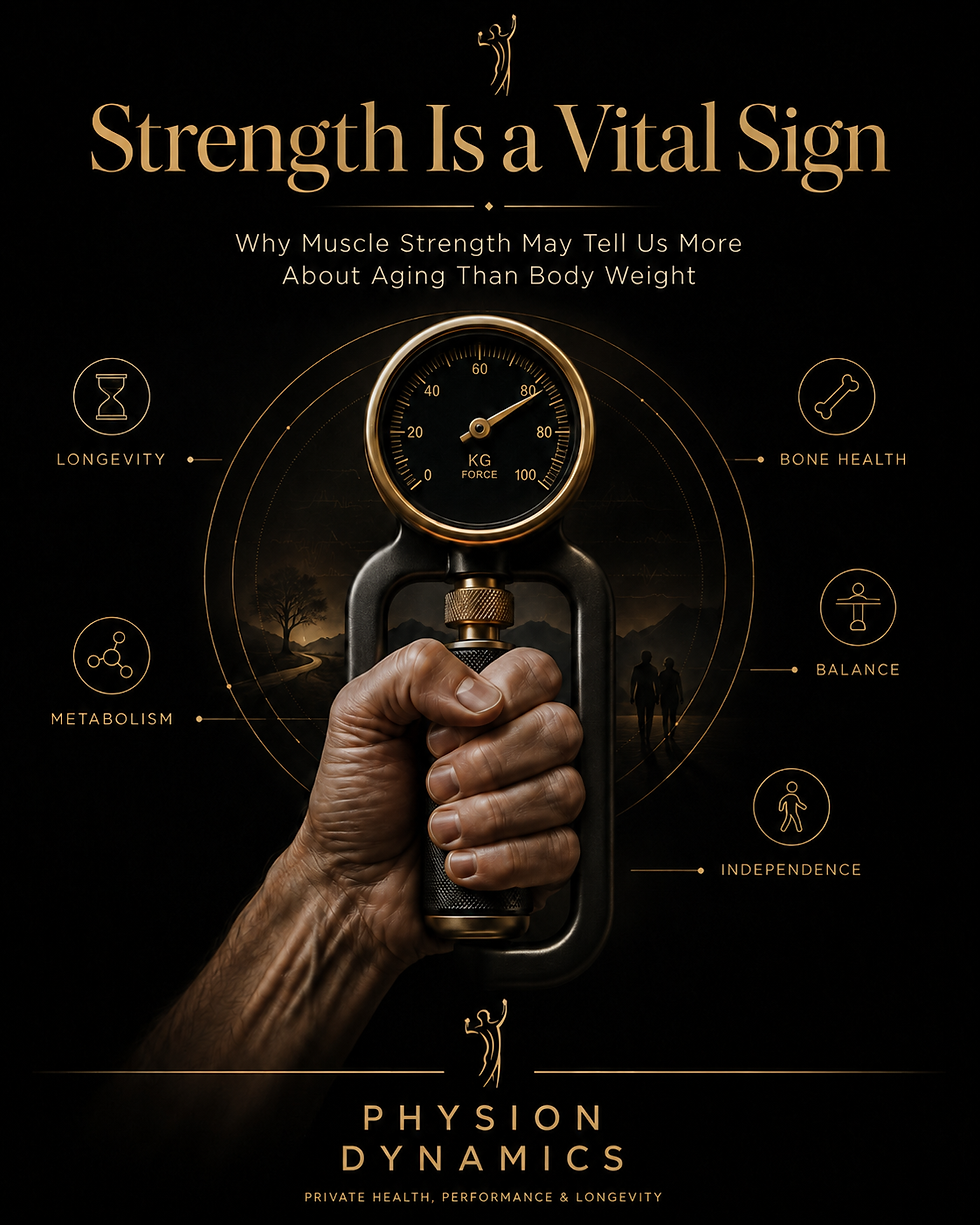
Strength is a vital sign.
Then:
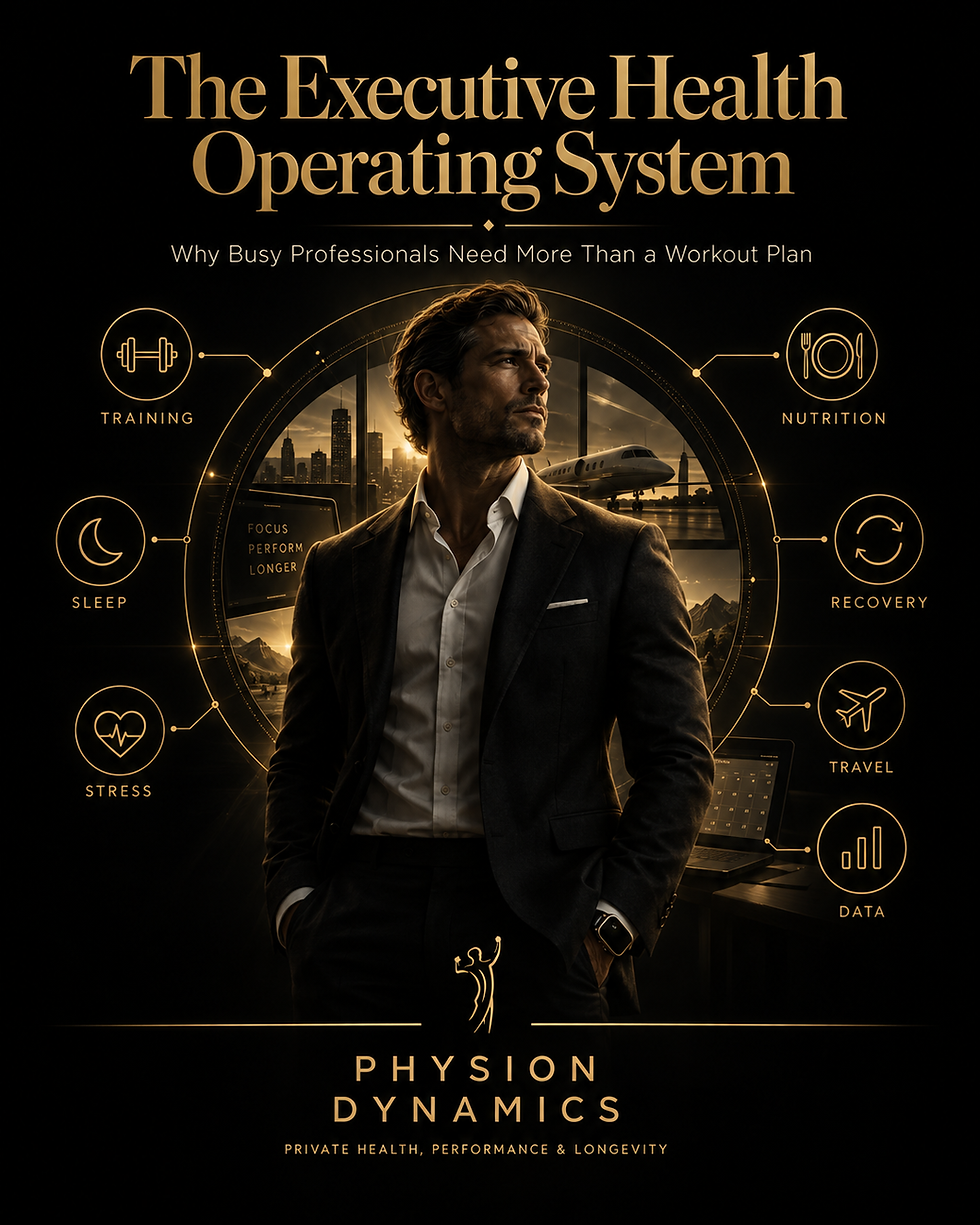
Your health needs an operating system.
Then:
Professional performance can hide physiological decline.
Now comes the next step.
Build enough reserve that life does not have to be perfect for your body to perform well.
Because life will not always cooperate. There will be long weeks, flights, illness, stress, deadlines, aging and unexpected change. The objective is not to build a life without challenges.
It is to build a body with enough capacity to meet them.
Physion Dynamics Takeaway
Do not ask only:
“Can my body handle my life?”
Ask:
“How much capacity do I have left after it does?”
That question changes health optimization completely. The goal stops being merely avoiding disease. It becomes building physical capital.
Strength, cardiorespiratory fitness, mobility, recovery, metabolic health, movement, sleep amd adaptability.
Because a resilient body is not one that is never challenged.
It is one that has somewhere to go when the challenge increases.
Call to Action
If you are an executive, entrepreneur, professional, athlete, or high performer who wants to build more than a temporary fitness transformation, the next step is understanding where your physical capacity currently stands.
The Physion Dynamics Concierge Private Health & Performance Review examines the broader system surrounding your performance, including training, strength, cardiovascular conditioning, nutrition, sleep, recovery, mobility, travel demands, lifestyle structure, and the barriers preventing sustainable progress.
Where medical assessment is indicated, that belongs with the appropriate regulated healthcare professional.
Where physical capacity and lifestyle can be improved, we build the system around the reality of your life. Not an imaginary perfect schedule.
Physion DynamicsPrivate Health, Performance & Longevity Coaching
For people who are not interested merely in functioning today.
They are building the capacity for tomorrow.
FAQ
1. What is physiological reserve?
Physiological reserve is a conceptual way of describing the extra capacity available to the body beyond ordinary daily requirements. It is not one standardized medical measurement. Related concepts such as intrinsic capacity are studied in healthy-aging research across physical and mental domains.
2. Can physiological reserve be improved?
Many components of physical capacity can be improved. Strength can respond to resistance training, cardiorespiratory fitness can improve with aerobic training, mobility can be trained, and sleep and lifestyle patterns can often be improved. The degree of adaptation varies by genetics, age, medical history, medications, training background, and other individual factors.
3. Why is strength important for resilience?
Strength creates physical margin. When everyday tasks represent only a small percentage of someone's maximum strength, they are easier to perform. Resistance training is also associated with lower mortality risk in observational research and supports muscular function across the lifespan.
4. Why is cardiorespiratory fitness important?
Cardiorespiratory fitness reflects the integrated ability of the cardiovascular, respiratory, and muscular systems to support sustained activity. Large observational evidence consistently associates higher fitness with lower risk of mortality and several chronic health outcomes.
5. Do I need to train every day to build resilience?
No. WHO guidance recommends 150 to 300 minutes of moderate aerobic activity per week, or an equivalent amount of vigorous activity, plus muscle-strengthening activity involving major muscle groups on at least two days per week. Individual programs should be adapted to health status, ability, goals, and recovery.
6. Does sleep really affect metabolic health?
Yes. Randomized sleep-restriction studies and meta-analyses have found reductions in measures of insulin sensitivity during insufficient sleep. Other controlled research suggests sleep restriction can increase hunger and energy intake. That does not mean one poor night causes metabolic disease, but repeated insufficient sleep is physiologically meaningful.
7. Can exercise compensate for sitting all day?
Exercise provides substantial health benefits, but sedentary time still deserves attention. WHO recommends regular physical activity while also limiting sedentary behavior. Research links prolonged sedentary patterns with adverse health outcomes, although the relationship is influenced by total activity and other factors.
8. Should I track HRV and wearable recovery scores?
They can provide useful contextual information, especially when examined as trends, but they should not be interpreted as diagnoses. Wearable data is most useful when it informs better decisions alongside how you feel, training performance, sleep, medical information, and professional judgment.
9. Is resilience the same thing as being healthy?
Not exactly. Resilience is one component of the broader health picture. Someone may possess excellent physical fitness while having an unrelated medical condition. Physical capacity should therefore complement, not replace, appropriate preventive and clinical healthcare.
10. When should I involve a physician rather than a coach?
Persistent abnormal blood pressure, unexplained chest pain, fainting, unusual shortness of breath, neurological symptoms, unexplained weight change, major fatigue, sudden declines in exercise tolerance, or other concerning symptoms require appropriate medical evaluation. Coaching should support medical care, never substitute for diagnosis or treatment.
Written By
Dragos Mutascu
Owner & Head Coach, Physion Dynamics
Lifestyle Transformation & Health Optimization Coach
Dumitru-Dragos Mutascu is the founder of Physion Dynamics, a private health, performance, and longevity coaching service designed for busy professionals, executives, athletes, and aging adults.
With an academic background in kinesiology and health sciences, graduate education, professional fitness and nutrition certifications, and ongoing physiotherapy education, Dragos approaches transformation from a broader perspective than exercise alone.
His work integrates strength, cardiovascular conditioning, movement, nutrition, recovery, lifestyle structure, and long-term physical performance to help clients build bodies capable of supporting demanding real-world lives.
At Physion Dynamics, the philosophy is simple:
Build the body to support the life.
Core Scientific References
Lang JJ, et al. (2024). Cardiorespiratory fitness is a strong and consistent predictor of morbidity and mortality among adults: an overview of meta-analyses representing over 20.9 million observations from 199 unique cohort studies. British Journal of Sports Medicine. PubMed
Shailendra P, et al. (2022). Resistance Training and Mortality Risk: A Systematic Review and Meta-Analysis. American Journal of Preventive Medicine. PubMed
Wu Y, et al. (2017). Association of Grip Strength With Risk of All-Cause Mortality, Cardiovascular Diseases, and Cancer in Community-Dwelling Populations: A Meta-analysis of Prospective Cohort Studies. PubMed
Sánchez-Sánchez JL, et al. (2024). Association of intrinsic capacity with functional decline and mortality in older adults: a systematic review and meta-analysis of longitudinal studies. The Lancet Healthy Longevity. PubMed
George PP, et al. (2022). Defining and assessing intrinsic capacity in older people: A systematic review and a proposed scoring system. Ageing Research Reviews. PubMed
World Health Organization. WHO Guidelines on Physical Activity and Sedentary Behaviour. Recommendations address aerobic activity, muscle strengthening, and sedentary time across adulthood. World Health Organization
Sondrup N, et al. (2022). Effects of sleep manipulation on markers of insulin sensitivity: A systematic review and meta-analysis of randomized controlled trials. Sleep Medicine Reviews. PubMed
Al Khatib HK, et al. (2019). Effects of sleep restriction on metabolism-related parameters in healthy adults: A comprehensive review and meta-analysis of randomized controlled trials. Sleep Medicine Reviews. PubMed
Watson NF, et al. (2015). Recommended Amount of Sleep for a Healthy Adult: A Joint Consensus Statement of the American Academy of Sleep Medicine and Sleep Research Society. PubMed
Wu J, et al. (2023). Sedentary behavior patterns and the risk of non-communicable diseases and all-cause mortality: A systematic review and meta-analysis. PubMed
Evans E, et al. (2025). Allostatic Load and Cardiovascular Disease: A Systematic Review. American Journal of Preventive Medicine. PubMed
Liao X, et al. (2023). Effects of multi-domain intervention on intrinsic capacity in older adults: A systematic review of randomized controlled trials. Experimental Gerontology.

Comments